
Apartment Turnover Dumpster Rentals in Maryland: Property Manager Cleanout Guide (2026)

Apartment turnovers can move quickly. Once a resident vacates a unit, property managers and maintenance teams may need to remove abandoned belongings, replace flooring, repair drywall, update cabinets, complete renovations, and prepare the apartment for the next resident.
When one unit—or several units—generate more debris than normal property trash service can reasonably handle, a temporary roll-off dumpster can provide a centralized disposal solution.
This guide explains how an apartment turnover dumpster rental in Maryland can support property managers, multifamily communities, maintenance teams, and contractors during unit cleanouts and renovations.
Why Apartment Turnovers Generate So Much Waste
Not every turnover requires a dumpster.
A relatively clean move-out may generate only a small amount of material. Other units, however, can require extensive cleanout and repair work before they are ready to rent again.
Common turnover debris can include:
Abandoned furniture
Mattresses and box springs
Shelving
Household junk
Carpet and padding
Flooring
Cabinets and countertops
Drywall
Wood
Doors and trim
Non-hazardous renovation debris
Packaging from replacement materials
When multiple units are being turned at the same time, this material can accumulate quickly.
A temporary dumpster gives maintenance personnel and contractors a designated location for eligible debris instead of allowing turnover waste to overwhelm the property's regular waste containers.
Apartment Turnover Dumpster Rental Maryland: When Does It Make Sense?
An apartment turnover dumpster may be appropriate when the scope of a project exceeds routine maintenance or normal trash collection.
Common situations include:
Large tenant move-outs
Abandoned-property cleanouts
Multiple simultaneous unit turnovers
Flooring replacement
Kitchen or bathroom renovations
Cabinet replacement
Interior remodeling
Property-wide upgrades
Multifamily renovation projects
Preparing acquired or distressed units for occupancy
For property managers overseeing multiple apartments, temporary dumpster rentals can also make it easier to coordinate maintenance crews and outside contractors around one centralized disposal point.
Dumpster Rentals for Tenant Move-Out Cleanouts
Some residents leave units completely empty.
Others leave behind furniture, mattresses, household items, shelving, bags of unwanted belongings, and other material that must be removed before maintenance work can begin.
When the volume is substantial, a temporary dumpster can help the property team move directly from cleanout into repair and renovation.
This can be particularly useful when maintaining a tight turnover schedule.
Instead of repeatedly transporting eligible debris off-site, crews can consolidate material in a roll-off container and schedule removal when the cleanup is complete or the dumpster reaches capacity.
Choosing the Right Dumpster Size for an Apartment Turnover
The right size depends on the condition of the unit, the materials being removed, and whether the dumpster will serve one unit or multiple apartments.
10 Yard Dumpster
A 10-yard dumpster may work for:
Small apartment cleanouts
Minor renovation debris
Bathroom updates
Limited flooring removal
Maintenance projects
It can also be useful where placement space is limited.
15 Yard Dumpster
A 15-yard dumpster can be a strong option for:
Full single-unit turnovers
Furniture removal
Carpet and flooring replacement
Cabinet removal
Moderate renovation debris
20 Yard Dumpster
A 20-yard dumpster provides additional capacity for:
Larger apartment cleanouts
Multiple unit turnovers
Renovation projects
Furniture and household contents
Flooring and construction debris
30 Yard Dumpster
A 30-yard dumpster may be appropriate for:
Multiple-unit renovation projects
Larger multifamily cleanouts
Property-wide improvements
Major interior renovation projects
High-volume turnover debris
Choosing the largest container isn't always necessary. The goal is to match capacity to the expected debris while considering weight, placement space, access, and project duration.
Multiple Apartment Turnovers at the Same Property
Managing several vacancies simultaneously changes the disposal strategy.
Instead of treating each apartment as an individual cleanout, property managers can potentially coordinate debris from several units through a centralized dumpster.
Before scheduling, consider:
Number of units being turned
Condition of each unit
Amount of abandoned property
Renovation scope
Types of debris
Expected project duration
Available dumpster placement
Contractor and maintenance schedules
For larger projects, a container swap or additional dumpster may be more practical than overloading one container.
Apartment Renovations and Turnover Debris
Many turnovers involve more than removing a former tenant's belongings.
Property owners may use vacancies as an opportunity to update units with:
New flooring
Cabinets
Countertops
Bathroom fixtures
Drywall repairs
Interior doors
Trim
Shelving
Other interior improvements
These improvements can generate substantial construction and demolition debris.
Property managers planning significant renovations should estimate both volume and weight before selecting a dumpster, particularly when disposing of heavier materials.
For additional guidance, see our Construction Debris Disposal Maryland guide.
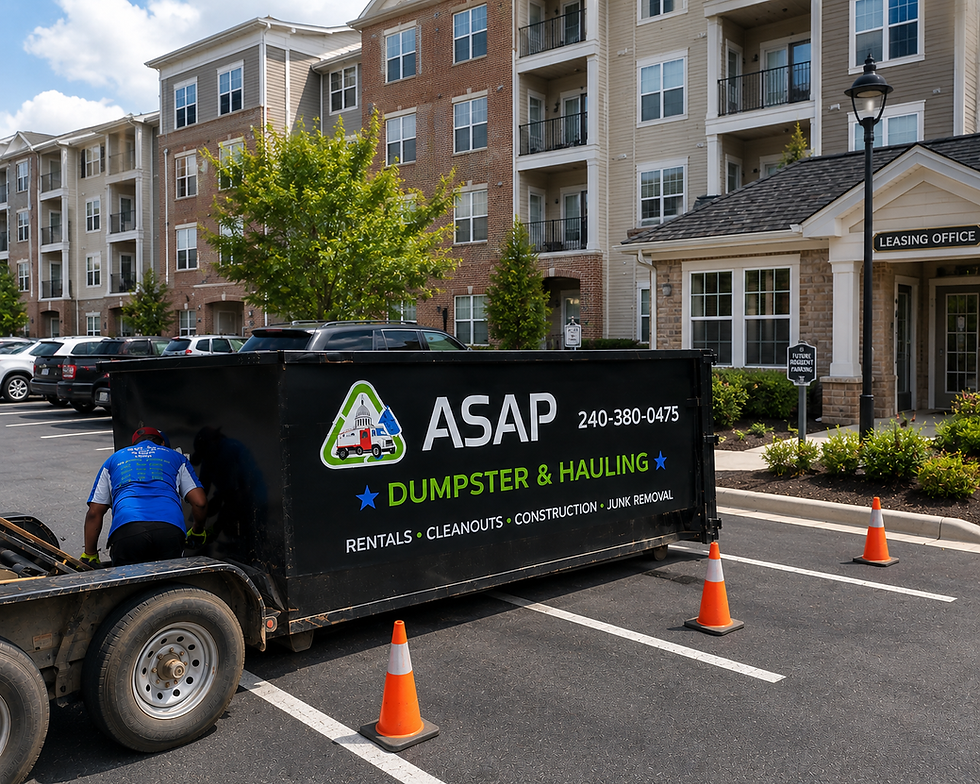
Where Should an Apartment Community Place a Dumpster?
Dumpster placement is especially important at occupied multifamily properties.
The container should be accessible to maintenance teams and contractors without unnecessarily disrupting residents or blocking critical access.
Possible placement areas include:
Designated parking spaces
Maintenance areas
Service areas
Renovation staging areas
Other approved paved locations
Before delivery, check for:
Parked vehicles
Gates
Fire lanes
Overhead wires
Low branches
Tight turns
Resident traffic
Surface conditions
Delivery truck clearance
Property managers should also verify applicable property rules and local requirements before placement.
Keep Turnover Debris Separate From Regular Community Trash
One of the biggest advantages of using a temporary roll-off dumpster is keeping project debris out of the property's normal waste stream.
Regular apartment dumpsters are designed primarily for routine resident waste.
Loading them with furniture, flooring, cabinets, drywall, or substantial turnover debris can consume capacity intended for everyday residents.
A temporary dumpster provides a dedicated location for eligible project material while allowing normal community trash service to continue.
What Can Go Into an Apartment Cleanout Dumpster?
Accepted materials vary by provider and disposal facility, but common eligible materials may include:
Furniture
Household junk
Cabinets
Shelving
Carpet
Flooring
Wood
Drywall
Doors
Trim
Non-hazardous renovation debris
Always confirm acceptable materials before loading.
What Should Stay Out of the Dumpster?
Certain materials may require separate handling or disposal.
These can include:
Hazardous chemicals
Paints and solvents
Propane tanks
Batteries
Tires
Asbestos-containing materials
Flammable liquids
Certain electronics
Other regulated materials
Property managers should communicate prohibited-material requirements to maintenance teams and contractors before the project begins.
Dumpster Rental vs. Full-Service Junk Removal for Apartment Turnovers
A dumpster isn't always the right solution.
The best option depends on who will perform the labor.
A dumpster rental can make sense when:
Maintenance personnel are already performing the cleanout
Contractors are completing renovations
Debris will accumulate over several days
Multiple units are involved
Crews need ongoing access to a container
Full-service junk removal may make more sense when:
The property needs labor to remove the items
A unit must be cleared quickly
Management doesn't have available maintenance staff
Material must be carried from the unit and loaded by a removal crew
Understanding that difference can help property managers choose the most efficient cleanup method for each turnover.
Apartment Turnover Dumpster Rentals Across Maryland
ASAP Dumpsters & Hauling provides temporary roll-off dumpster rentals for apartment turnovers, multifamily renovations, property cleanouts, contractors, and property improvement projects throughout our Maryland service area.
Service areas include:
Dumpster availability, scheduling, and project requirements may vary by location.
Related Property Management Resources
Property managers planning cleanouts, renovations, or larger waste projects can also explore:
These resources can help management teams plan container size, understand project debris, estimate rental considerations, and coordinate larger property cleanup projects.
Request an Apartment Turnover Dumpster Quote
Every apartment turnover is different.
One vacant unit may require only a modest cleanout, while multiple simultaneous turnovers or renovation projects can generate substantially more debris.
ASAP Dumpsters & Hauling provides roll-off dumpster rentals for apartment communities, property managers, maintenance teams, contractors, and multifamily renovation projects throughout our Maryland service area.
When requesting a quote, provide the property location, number of units involved, expected materials, project dates, and preferred dumpster size if known.
Contact ASAP Dumpsters & Hauling to request an apartment turnover dumpster rental quote and discuss the right container for your property.
Frequently Asked Questions
What size dumpster is best for an apartment turnover?
The appropriate size depends on the condition of the unit and the amount of debris. A 15-yard dumpster may work well for many single-unit turnovers, while 20- or 30-yard containers may be more appropriate for larger cleanouts, renovations, or multiple simultaneous turnovers.
Can one dumpster be used for multiple apartment turnovers?
Yes. Depending on container capacity, debris type, weight, and project timing, property managers may be able to use one centralized dumpster for multiple units. Larger projects may require additional containers or scheduled swaps.
Can furniture and flooring go in an apartment turnover dumpster?
Many dumpsters can accept common turnover materials such as furniture, carpet, flooring, cabinets, wood, and general household junk. Acceptance varies by provider and disposal facility, so materials should be confirmed before loading.
Should apartment renovation debris go into the property's regular trash dumpster?
Substantial renovation or turnover debris is generally better handled separately rather than consuming the capacity intended for routine resident waste. A temporary roll-off dumpster can provide dedicated capacity for eligible project debris.


Comments