
HOA Dumpster Rental Maryland: Community Cleanup & Bulk Trash Day Guide (2026)
Updated: Sep 11

HOA Dumpster Rental Maryland: Community Cleanup & Bulk Trash Day Guide (2026)
Community cleanup days can give residents a convenient way to clear unwanted furniture, household junk, renovation debris, and other bulky items while helping homeowners associations maintain cleaner neighborhoods.
But a successful HOA cleanup requires more than simply having a dumpster delivered.
Dumpster size, placement, resident communication, acceptable materials, pickup timing, and the expected amount of debris should all be considered before cleanup day begins.
This guide explains how to plan an HOA dumpster rental in Maryland and organize a community cleanup or bulk trash event that is convenient for residents and manageable for property managers and HOA boards.
Why Maryland HOAs Rent Dumpsters for Community Cleanups
Routine residential trash collection isn't always designed for large quantities of bulky household material.
Over time, residents may accumulate items such as:
Old furniture
Mattresses
Broken shelving
Household junk
Outdoor furniture
Small renovation debris
Wood
Flooring
Cabinets
General clutter
An HOA-sponsored cleanup gives residents a designated opportunity to dispose of eligible bulky items rather than leaving them around common areas or waiting for individual disposal arrangements.
Temporary roll-off dumpsters can also help consolidate the material into a controlled collection area.
HOA Dumpster Rental Maryland: Benefits for Community Cleanup Events
A temporary dumpster can make an HOA cleanup easier to organize for both residents and community management.
Potential benefits include:
Centralizing bulk waste collection
Keeping debris out of common areas
Supporting neighborhood beautification efforts
Simplifying disposal for residents
Reducing scattered piles of unwanted items
Creating a defined start and end date for cleanup
Allowing the HOA to coordinate disposal as one organized project
For larger communities, multiple dumpsters or scheduled swaps may be appropriate depending on expected participation and available space.
Choosing the Right Dumpster Size for an HOA Cleanup
The right dumpster size depends primarily on the number of participating households and the types of items residents will be disposing of.
10 Yard Dumpster
A 10-yard dumpster may work for:
Small HOA communities
Common-area maintenance
Landscaping projects
Limited cleanup events
Small quantities of household debris
For a community-wide bulk trash day, however, this size can fill quickly.
15 Yard Dumpster
A 15-yard dumpster can work well for:
Smaller neighborhood cleanup events
Townhouse communities
Moderate quantities of household junk
Common-area improvement projects
20 Yard Dumpster
A 20-yard dumpster provides additional capacity for:
Medium-sized HOA cleanups
Furniture and household junk
Community maintenance projects
Neighborhood beautification events
30 Yard Dumpster
A 30-yard dumpster is often the strongest option when substantial volume is expected.
It can be useful for:
Larger HOA communities
Community-wide bulk trash events
High resident participation
Bulky household items
Larger property improvement projects
The largest dumpster isn't automatically the best choice. Available placement space, expected debris, weight, access, and community size should all be considered.
How Many Dumpsters Does an HOA Cleanup Need?
There isn't one universal number.
A small townhouse association may need only one container, while a larger community could require multiple dumpsters or scheduled swaps.
Before booking, consider:
Number of homes in the community
Expected resident participation
Whether furniture will be accepted
Length of the cleanup event
Dumpster size
Available placement areas
Previous cleanup-day volume, if known
If your HOA has hosted a bulk trash event before, previous disposal volume can be particularly helpful when estimating capacity.
For a first-time event, discussing the community size and expected materials with the dumpster provider can help determine an appropriate starting point.
Where Should an HOA Place the Dumpster?
Placement can have a major impact on how smoothly the cleanup operates.
Potential locations include:
Community parking areas
Clubhouse parking lots
Maintenance areas
Designated common areas
Other paved locations with sufficient truck access
The delivery vehicle needs enough room to safely place and retrieve the container.
Before delivery, HOA managers should consider:
Overhead wires
Parked vehicles
Gates
Low tree branches
Fire lanes
Resident traffic
Surface conditions
Access for the delivery truck
You should also determine whether community rules, local requirements, or property restrictions affect dumpster placement.
Plan Resident Communication Before Cleanup Day
Communication is one of the easiest ways to prevent problems.
Before the event, provide residents with clear information about:
Cleanup date
Start and end times
Dumpster location
Items that are accepted
Items that are prohibited
Whether furniture is permitted
Whether residents need identification or proof of residency
What happens when the dumpster reaches capacity
Consider distributing the information through community email, resident portals, newsletters, posted notices, or HOA social channels.
Clear instructions can reduce prohibited materials and help prevent containers from being overloaded.
What Can Residents Put in an HOA Cleanup Dumpster?
Accepted materials depend on the dumpster provider and disposal facility, but common household cleanup materials may include:
Furniture
Tables and chairs
Cabinets
Shelving
Wood
Flooring
Household junk
Non-hazardous renovation debris
General clutter
Always confirm acceptable materials before distributing instructions to residents.
What Should Residents Keep Out of the Dumpster?
Certain materials may be prohibited or require separate disposal arrangements.
These can include:
Hazardous chemicals
Paints and solvents
Propane tanks
Batteries
Tires
Asbestos-containing materials
Flammable liquids
Certain electronics
Other regulated materials
The HOA should provide the prohibited-items list to residents before cleanup day rather than waiting until materials have already been placed in the container.
Avoid Overloading the Dumpster
A community cleanup can generate debris surprisingly quickly.
Residents should not load materials above the dumpster's permitted fill line or allow debris to extend over the sides.
An overloaded dumpster may be unsafe to transport and can delay removal.
For high-participation events, it may be better to plan for additional capacity or a swap rather than attempting to fit everything into one overloaded container.
Consider Having Someone Monitor the Cleanup Area
For larger HOA events, having a board member, property management representative, maintenance employee, or designated attendant near the collection area can help.
That person can:
Direct residents to the correct dumpster
Reinforce prohibited-item rules
Watch container capacity
Keep the collection area organized
Identify potential problems early
This becomes especially valuable when several dumpsters are being used or the event serves a large number of households.
HOA Cleanups vs. Regular Trash Service
Temporary roll-off dumpsters and regular community trash collection serve different purposes.
Regular trash service handles routine household waste.
An HOA cleanup dumpster is better suited for temporary events involving larger volumes of eligible bulky material.
HOAs may use temporary dumpsters for:
Spring cleaning
Fall cleanups
Neighborhood beautification
Bulk trash days
Community improvement projects
Clubhouse renovations
Common-area maintenance
That makes temporary dumpster rentals a useful supplement to normal community waste service rather than a replacement for it.
HOA Dumpster Rentals Across Maryland
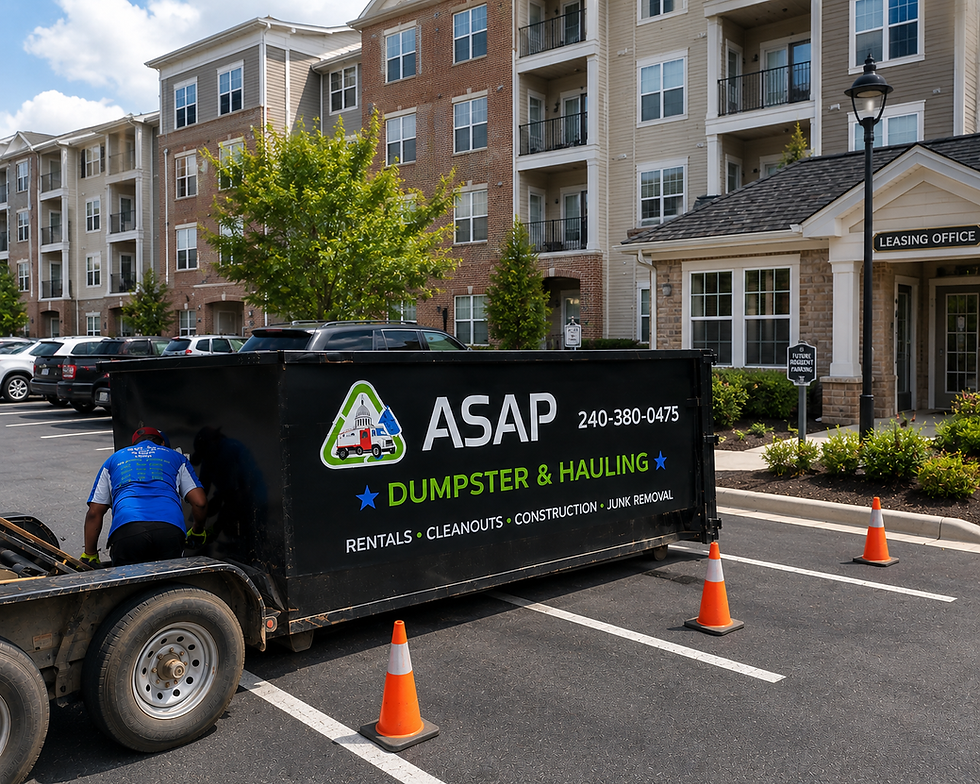
ASAP Dumpsters & Hauling provides dumpster rental solutions for HOA communities, property managers, contractors, and residential projects throughout our Maryland service area.
Service areas include:
Availability, dumpster sizes, and scheduling can vary by location and project requirements.
Related Dumpster Rental Resources
Planning a community or property cleanup? These resources can help:
Together, these guides can help property managers and HOA boards determine the appropriate dumpster size, understand disposal requirements, and plan cleanup projects more efficiently.
Request an HOA Dumpster Rental Quote
Every community cleanup is different.
A small townhouse association may need a single temporary dumpster, while a larger HOA event could require additional containers or coordinated swaps.
ASAP Dumpsters & Hauling provides roll-off dumpster rentals for community cleanups, bulk trash events, property improvement projects, and other temporary waste needs throughout our Maryland service area.
When requesting a quote, provide the community location, cleanup date, approximate number of participating households, expected materials, and preferred dumpster size if known.
Contact ASAP Dumpsters & Hauling to request an HOA community cleanup dumpster quote and discuss the right setup for your event.
Frequently Asked Questions
What size dumpster is best for an HOA community cleanup?
The best size depends on the number of participating households and expected debris. Smaller communities may be able to use a 15- or 20-yard dumpster, while larger community-wide bulk trash events may require a 30-yard dumpster, multiple containers, or scheduled swaps.
Can an HOA rent multiple dumpsters for a community cleanup?
Yes. Larger communities may use multiple dumpsters or arrange swaps when one container is unlikely to provide enough capacity for the entire event.
What can residents put in an HOA cleanup dumpster?
Common acceptable materials may include furniture, household junk, cabinets, shelving, wood, flooring, and certain non-hazardous renovation debris. Accepted materials vary, so the HOA should confirm the approved material list before notifying residents.
How should an HOA prepare for dumpster delivery?
Choose an accessible placement area, keep vehicles away from the delivery zone, check for gates and overhead obstructions, confirm any applicable property or local requirements, and make sure the delivery truck has sufficient space to place and retrieve the dumpster.


Comments